

As energy efficiency regulations tighten worldwide, heating equipment distributors are replacing conventional boilers with full premix condensing gas boilers. In 2026, this shift is accelerating across Europe, Central Asia, the Middle East, and South America — driven by stricter emissions targets and rising end-user demand for lower operating costs.
For distributors, selecting the right manufacturing partner is no longer only about price. Product reliability, thermal efficiency, international certification, and long-term technical support have become equally important factors in building a sustainable heating business.
Why Full Premix Condensing Gas Boilers Are Replacing Conventional Models
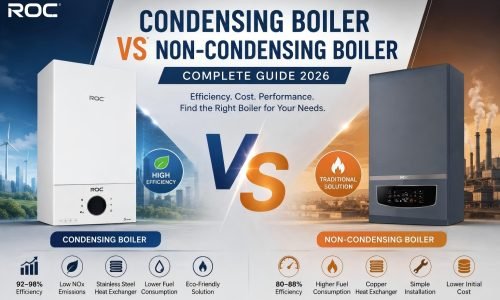
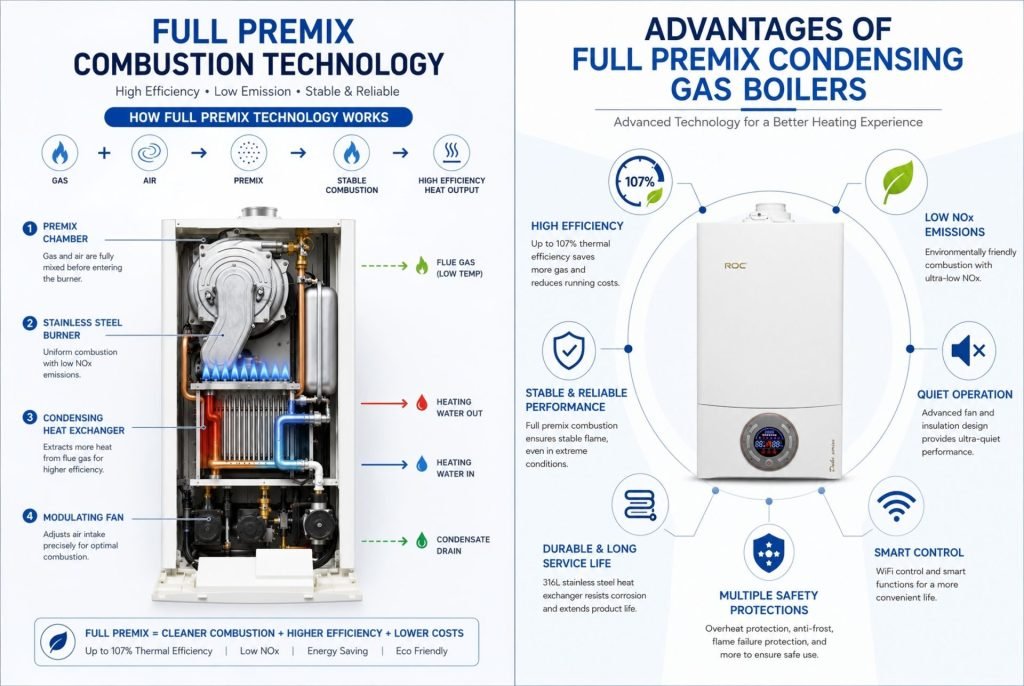
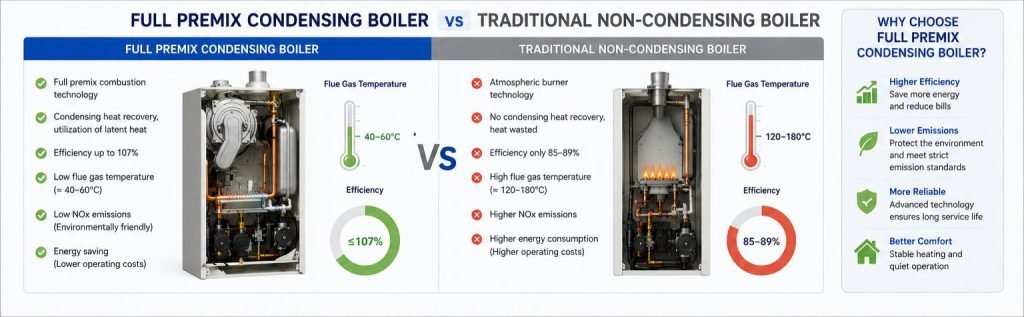
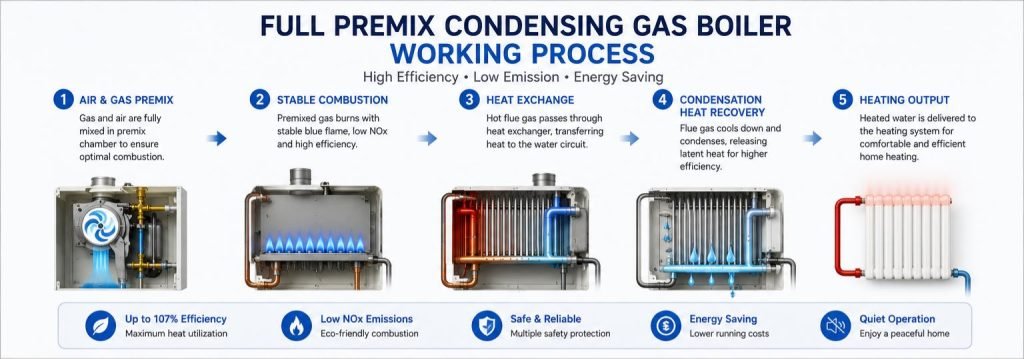
Compared with traditional atmospheric boilers, a full premix condensing gas boiler pre-mixes gas and air before combustion, allowing heat to be recovered from flue gases that would otherwise be wasted. This results in measurable performance advantages that distributors can promote confidently:
- Thermal efficiency up to 107% (vs. 85–90% for conventional models)
- Lower gas consumption — typically 15–30% energy savings
- Ultra-low NOx emissions, meeting EU EcoDesign and ErP requirements
- Stable simultaneous heating and domestic hot water output
- Quieter operation due to sealed premix burner design
- Longer service life with fewer combustion-related components
According to the European Commission’s EcoDesign Regulation, condensing boilers are now the minimum standard for new heating installations across the EU — a policy direction that other regions are rapidly following.
What Distributors Should Look for in a Full Premix Condensing Gas Boiler Supplier
Choosing the wrong supplier can damage your brand reputation and increase after-sales costs. When evaluating manufacturers of full premix condensing boilers, distributors should assess five critical areas:
1. Manufacturing Experience and Quality Control
A factory with decades of production history typically demonstrates more stable processes, tighter component tolerances, and lower field failure rates. Look for ISO-certified manufacturing and documented quality management systems before committing to a long-term supply relationship.
2. International Certifications for Your Target Markets
Market entry depends on regulatory compliance. Verify that your supplier holds the certifications your markets require — CE and ErP for Europe, UKCA for the UK, EAC for Russia and Central Asia, and regional equivalents elsewhere. Certification gaps create costly import delays and legal exposure. You can verify CE marking requirements via the EU NANDO database.
3. OEM and ODM Capability
Many distributors require customized branding, packaging, manuals, control panels, or firmware. A qualified OEM factory should offer flexible customization without compromising core product quality or certification validity. Browse our full heating product range to understand what customization options are available.
4. Stable Component Supply Chain
High-quality components — including modulating gas valves, variable-speed circulation pumps, stainless steel heat exchangers, and intelligent control boards — directly affect long-term product reliability. Ask potential suppliers to disclose their key component brands and supply chain backup arrangements.
5. After-Sales Technical Support
Installation documentation, spare parts availability, multilingual technical manuals, and remote engineering support can significantly reduce your service costs and improve installer satisfaction. This is especially important when entering new markets where local technical knowledge may be limited.
Why Chinese Manufacturers Lead Global Supply of Full Premix Condensing Boilers
China has become one of the world’s leading production bases for wall-hung gas boilers. Advanced manufacturing infrastructure, competitive costs, and sustained R&D investment allow Chinese factories to supply full premix condensing gas boilers that meet international performance and safety standards.
Leading Chinese manufacturers now provide:
- Full premix condensing technology with modulating burners
- Smart Wi-Fi control and OpenTherm compatibility
- Natural gas and LPG compatibility
- Multiple safety protection systems (overheat, frost, dry-fire)
- High-efficiency stainless steel or aluminum heat exchangers
- Flexible OEM and white-label solutions
These capabilities allow distributors to compete effectively in both price-sensitive and premium market segments. For a detailed look at available models, see our wall-hung gas boiler product page.
Partner with ROC for Full Premix Condensing Gas Boilers
With more than 30 years of manufacturing experience, ROC specializes in full premix condensing gas boilers for global distributors and OEM partners. Our products are supplied to customers in more than 30 countries across Europe, the Middle East, Central Asia, and beyond.
ROC offers:
- Traditional and full premix condensing boiler solutions
- Strict quality management across all production lines
- International certifications including CE, ErP, and EAC
- Flexible OEM and ODM services with customized branding
- Professional export documentation and logistics support
Whether you are launching a new heating brand or expanding your existing product range, working with an experienced condensing gas boiler manufacturer can make a significant difference to your long-term market success. Contact our export team to discuss your OEM requirements.
Conclusion
The global heating industry continues to move toward higher efficiency and lower emissions. Full premix condensing gas boilers are becoming the preferred choice for distributors seeking reliable, energy-saving heating solutions that meet modern regulatory requirements. Partnering with an experienced manufacturer allows distributors to deliver better products, improve customer satisfaction, and build stronger market competitiveness in 2026 and beyond.