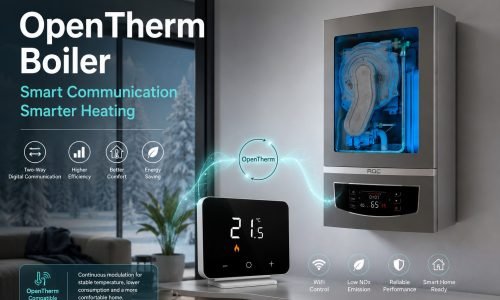


As energy efficiency and smart heating become increasingly important, more modern gas boilers are adopting OpenTherm communication technology. Unlike traditional on/off thermostats, an OpenTherm boiler keeps up a continuous conversation with the room thermostat, letting the heating system run far more intelligently and efficiently.
Whether you are a homeowner planning a heating upgrade, an installer looking for better system performance, or a distributor selecting products for your market, understanding how an OpenTherm boiler works can help you make better decisions.
What Is an OpenTherm Boiler?
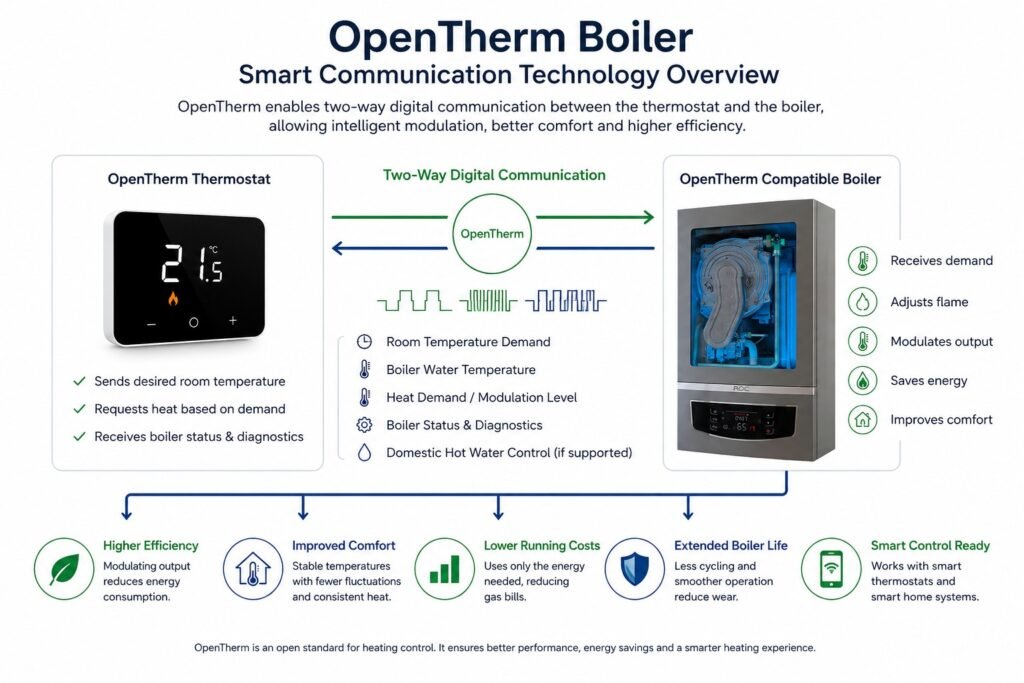
OpenTherm is an open digital communication protocol developed specifically for central heating systems. It allows a compatible thermostat and boiler to exchange information continuously through a simple two-wire connection. The standard is maintained by the independent, non-manufacturer-dependent OpenTherm Association, which means an OpenTherm-compatible thermostat from one brand can, in principle, work with a boiler from another.
Instead of simply telling the boiler to turn on or off, an OpenTherm thermostat can communicate important operating information such as:
- Desired room temperature
- Boiler water temperature
- Heat demand
- Flame modulation level
- System operating status
- Fault information
- Domestic hot water settings (when supported)
This enables the boiler to automatically adjust its output according to actual heating demand.
How Does an OpenTherm Boiler Work?
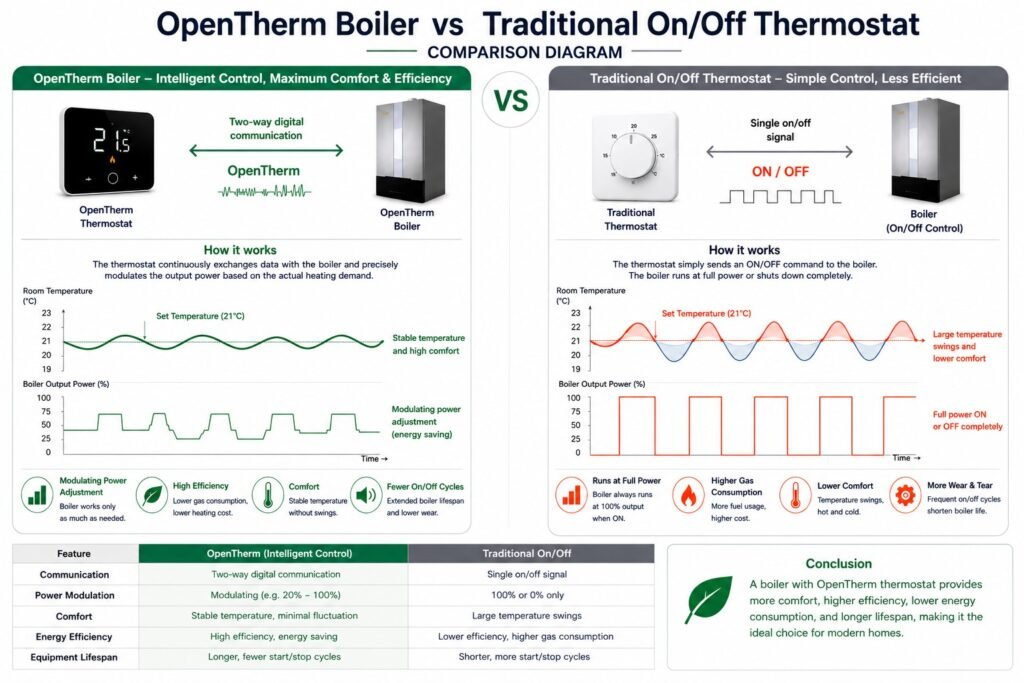
Traditional thermostats work like a standard light switch.
When the room becomes cold: Thermostat → Boiler ON
When the desired temperature is reached: Thermostat → Boiler OFF
The boiler repeatedly starts and stops throughout the day.
An OpenTherm boiler works differently. Instead of switching completely on or off, the thermostat continuously tells the boiler how much heat is actually required.
For example:
- Outside temperature is mild
- Indoor temperature is close to the target
- Only a small amount of heating is required
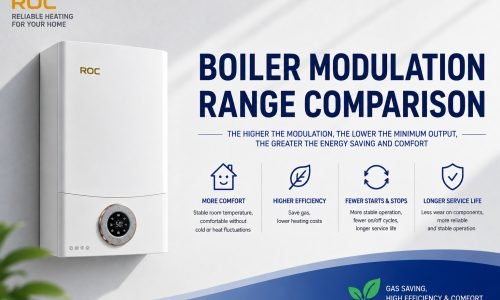
The thermostat may instruct the boiler to operate at only 25–35% of its maximum output. As heating demand changes, the boiler automatically adjusts its flame size and water temperature without unnecessary cycling.
OpenTherm vs Traditional On/Off Thermostats
| Feature | OpenTherm | Traditional Thermostat |
|---|---|---|
| Communication | Digital two-way | Simple ON/OFF |
| Boiler Modulation | Yes | No |
| Flame Adjustment | Automatic | Full power only |
| Comfort | More stable | Temperature fluctuations |
| Energy Efficiency | Higher | Lower |
| Boiler Cycling | Reduced | Frequent |
| Diagnostic Information | Available | Limited |
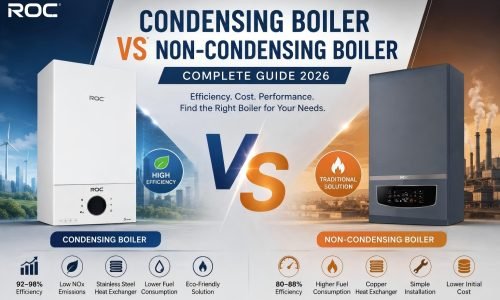
For modern condensing boilers, OpenTherm allows the appliance to spend more time operating at lower output, where efficiency is generally highest. To see why condensing technology itself matters for global heating standards, read our article on why condensing boilers are becoming the global standard in 2026.
Main Benefits of an OpenTherm Boiler
1. Better Energy Efficiency
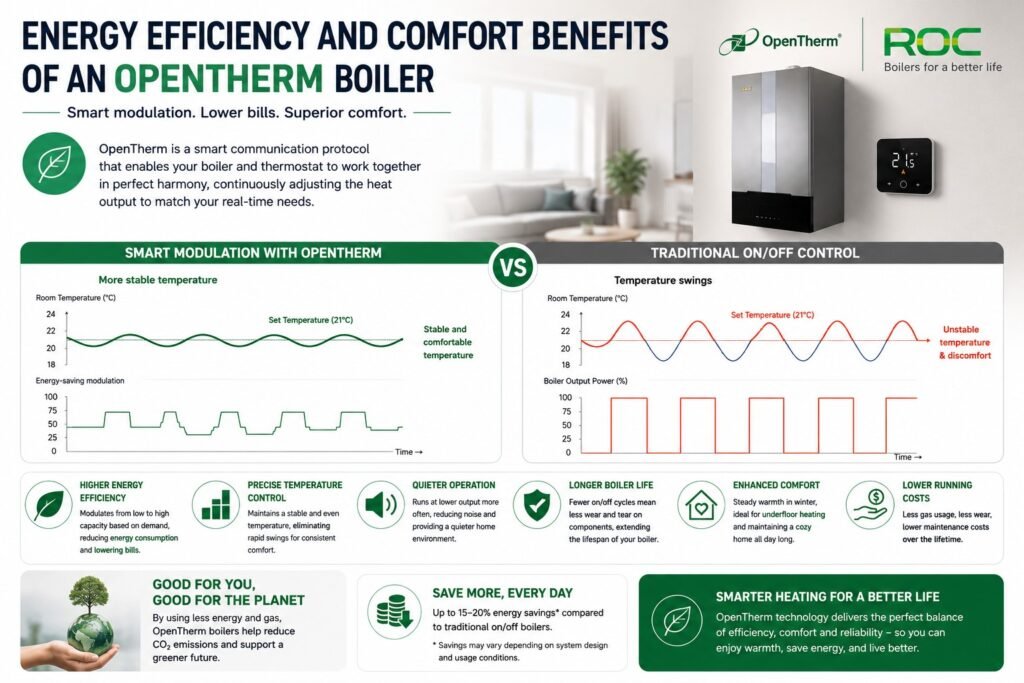
Because the boiler only produces the heat actually required, fuel consumption can be reduced compared with traditional on/off control. Lower flow temperatures also help condensing boilers remain in condensing mode for longer periods, improving seasonal efficiency — a requirement closely tied to the EU’s Ecodesign efficiency requirements for hot-water boilers.
2. Improved Indoor Comfort
Traditional thermostats often cause noticeable temperature swings. An OpenTherm boiler maintains a much more consistent indoor temperature by continuously adjusting output instead of repeatedly starting and stopping, resulting in a more comfortable living environment.
3. Reduced Boiler Wear
Frequent ignition and shutdown place additional stress on components such as ignition electrodes, fans, gas valves, and pumps. Since OpenTherm reduces unnecessary cycling, component wear may also be reduced over time.
4. Lower Noise Levels
When operating at partial load, the burner and fan generally produce less noise than during full-power operation, contributing to quieter heating operation — especially during mild weather.
5. Enhanced Smart Heating Integration
Many smart thermostats support OpenTherm, enabling advanced features such as weekly scheduling, remote control via mobile app, energy usage reports, holiday mode, and weather-based optimization (depending on the thermostat).
Is Every Boiler Compatible with OpenTherm?
No. A boiler must include OpenTherm communication capability in its control system. Some boilers only support simple on/off thermostats, while others provide OpenTherm as standard or as an optional interface. Before purchasing a thermostat or boiler, always verify compatibility with the manufacturer’s technical documentation — for example, the specification sheets in our wall-hung gas boiler product range.
Is OpenTherm Suitable for Condensing Boilers?
Yes. OpenTherm is particularly well suited for modern premix condensing boilers. Condensing boilers achieve their highest efficiency when return water temperatures remain relatively low. Because OpenTherm continuously adjusts boiler output and flow temperature according to demand, it helps maintain operating conditions that maximize condensing performance. For more background on this combustion technology, see our guide to full premix condensing gas boilers.
This combination can improve both comfort and overall energy efficiency.
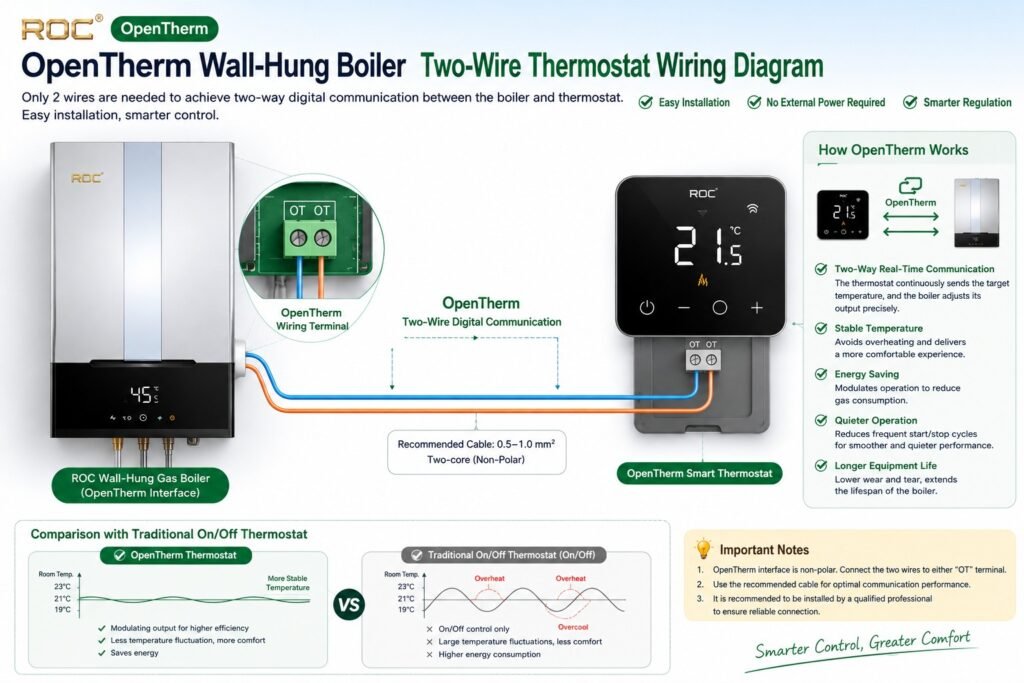
Typical OpenTherm Wiring
A standard OpenTherm connection typically requires only two communication wires between the thermostat and the boiler. Unlike traditional switched thermostats, these wires transmit digital data rather than acting as a simple electrical switch.
Always follow the wiring instructions provided by both the boiler manufacturer and the thermostat manufacturer — incorrect wiring may prevent proper communication.
Installation Tips for an OpenTherm Boiler
Professional installers should consider the following recommendations:
- Confirm that both boiler and thermostat support OpenTherm.
- Use suitable communication cable as recommended by the manufacturer.
- Avoid connecting OpenTherm terminals to conventional on/off thermostat terminals.
- Update controller firmware if required.
- Test communication before commissioning.
- Verify modulation operation after installation.
Proper commissioning ensures the heating system delivers its intended efficiency and comfort. Step-by-step reference material is available in our installation & commissioning guides, and common fault codes are covered in the wall-hung boiler troubleshooting guide.
Common Questions About OpenTherm Boilers
Does an OpenTherm boiler save gas?
In many heating systems, OpenTherm can reduce gas consumption by allowing the boiler to operate more efficiently and by minimizing unnecessary cycling. Actual savings depend on the building, insulation, user habits, and system configuration.
Can OpenTherm work with underfloor heating?
Yes. Many underfloor heating systems benefit from the lower and more stable water temperatures that OpenTherm can provide.
Can OpenTherm be used with radiators?
Absolutely. Radiator heating systems are among the most common applications for OpenTherm-compatible boilers.
Can OpenTherm replace an existing thermostat?
If both the boiler and the new thermostat support OpenTherm, replacing an existing thermostat is usually straightforward. Compatibility should always be confirmed before installation.
Does OpenTherm work with smart thermostats?
Many leading smart thermostats support OpenTherm communication, although supported features may vary by manufacturer and boiler model. For further troubleshooting and compatibility questions, see our common problems & solutions page.
Why Installers and Distributors Prefer OpenTherm Boilers
OpenTherm provides benefits across the entire supply chain.
For installers, it offers:
- Easier system optimization
- Better customer satisfaction
- Reduced callback risk
- More accurate diagnostics
For distributors, it provides:
- Higher-value products
- Better compatibility with modern smart homes
- Stronger competitiveness in energy-efficient markets
- Greater appeal in regions where intelligent heating controls are increasingly requested
OpenTherm and ROC Gas Boilers
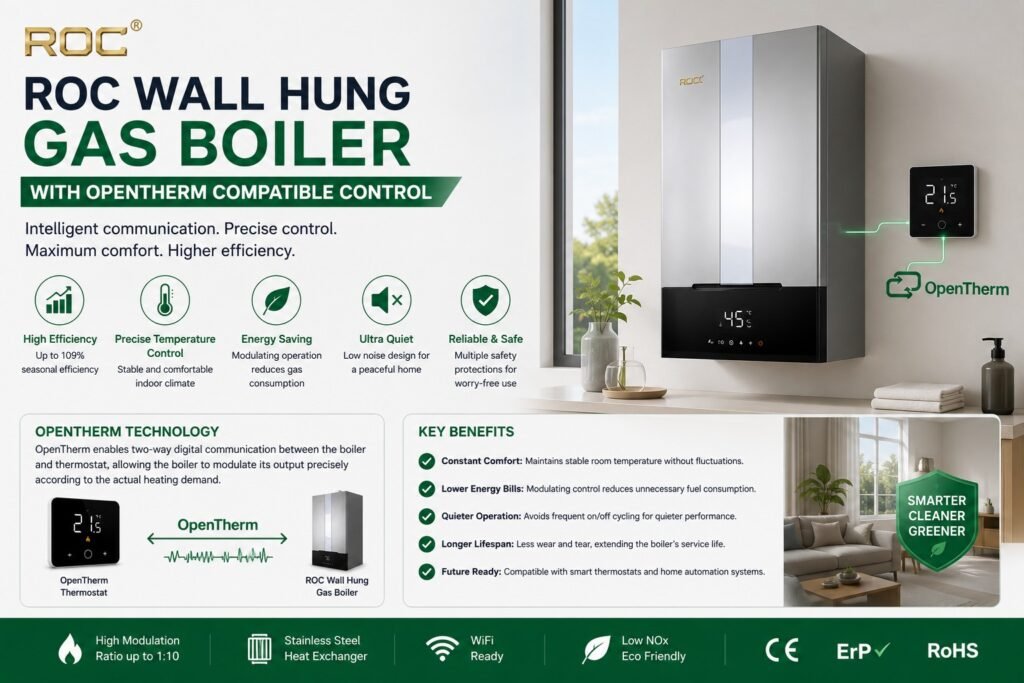
Selected ROC wall-hung gas boilers support OpenTherm communication, allowing compatibility with suitable OpenTherm thermostats for more intelligent heating control.
Combined with advanced features such as:
- Full premix combustion technology
- High-efficiency heat exchangers
- Low NOx emissions
- Wi-Fi remote control (selected models)
- Smart temperature modulation
ROC boilers are CE and GOST certified — see our quality & certifications page — and are designed to provide efficient, reliable, and comfortable heating solutions for residential and light commercial applications.
Whether you are sourcing boilers for distribution or selecting products for your next project, choosing an OpenTherm boiler can help improve energy performance while meeting the growing demand for smarter heating systems. Distributors interested in stocking OpenTherm-compatible models can learn more on our become a dealer page.
Conclusion
OpenTherm represents an important advancement in boiler control technology. By replacing simple on/off operation with intelligent digital communication, an OpenTherm boiler enables more stable temperatures, improved efficiency, lower fuel consumption, and better overall system performance.
As smart heating continues to grow worldwide, OpenTherm-compatible boilers are becoming an increasingly attractive choice for homeowners, installers, distributors, and OEM partners seeking reliable, future-ready heating solutions.